Explore the Maremma, the wildest part of Tuscany!
Diaccia Botrona Nature Reserve
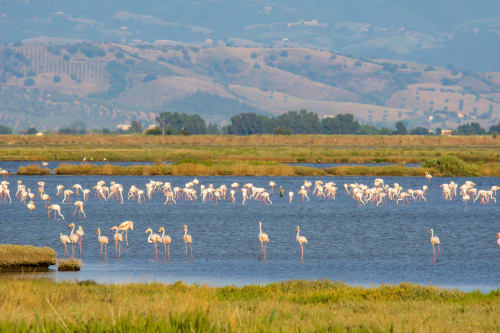
Vast marshy reserve , with a large colony of flamingos, access points and paths that can be freely traveled on foot or by bicycle.
Sighting and birdwatching points!
Reachable by bicycle from the Farmhouse!
Castiglione della Pescaia
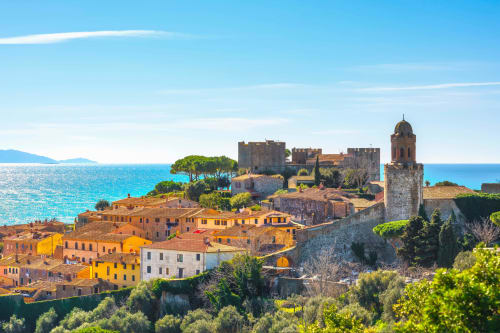
Castiglione della Pescaia is a medieval village with beautiful beaches, shops and lovely restaurants. Located in the Grosseto Maremma, for the landscape qualities and the services offered, it is known for its seaside tourist vocation.
Saturnia Thermal baths
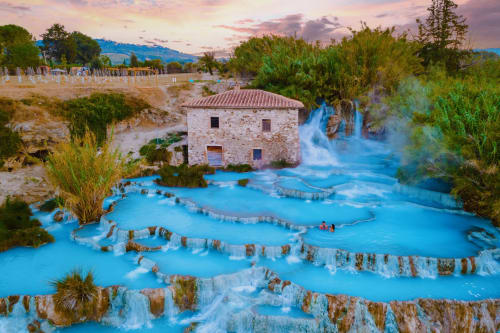
The Terme di Saturnia consists of a single thermal spring which flows at a constant temperature of 37.5 degrees and is located within a thermal structure that includes: Thermal Park, Terme di Saturnia SPA & Golf Resort and Golf Club. To visit at least once in a lifetime!
San Lorenzo Cathedral
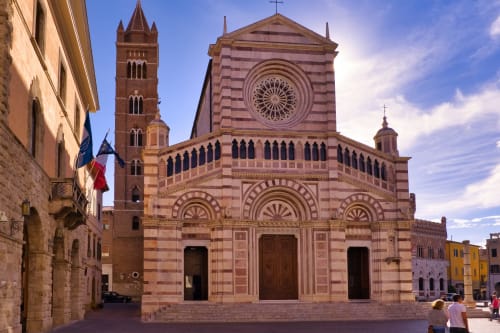
Grosseto Cathedral is a Roman Catholic cathedral located in the city's main square. Built between 1294 and 1302.
It is dedicated to San Lorenzo and has a characteristic Romanesque taste for the two-tone white-red (red marble of Caldana).
Cala Violina
Cala Violina is the most famous beach in the Tuscan Maremma. The sea is crystal clear and the views range from the green of the forest to the endless blue sea. Traffic is limited and since 2021 it is necessary to make an advance parking reservation.
Cala Violina has a peculiarity that makes it famous, its name derives from the sound emitted by the grains of sand when they are stepped on... The sand of Cala Violina is unique in the whole area and very rare, if stepped on, in fact, it emits a sound reminiscent of the strings of a violin .
Maremma Regional Park
Natural park with forest trails , cycle paths, canoeing and fishing possibilities, visitor center.
Pitigliano
Pitigliano, located about 80 kilometers south-east of Grosseto, with the characteristic historic center known as the little Jerusalem , due to the historical presence of a Jewish community that has always been well integrated into the social context and which has its own synagogue . Etruscan remains and medieval and Renaissance structures.
Santa Fiora
The village of Santa Fiora is located on the southern slope of Monte Amiata and is surrounded by chestnut trees.
It is recognized as one of the "Most Beautiful Villages in Italy".
Palaces, churches, the mercury mining museum and more await you.
Roselle
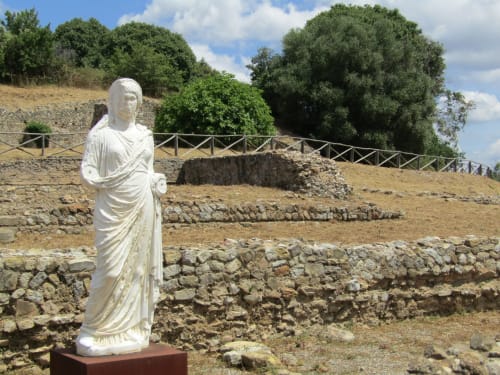
Roselle was one of the twelve Etruscan city-states, today it is an interesting archaeological site where it is possible to visually see the overlapping of Roman civilization on Etruscan civilization.
Walking along the road you will immerse yourself in the atmosphere of the time between the walls, the old city, the public thermal baths , the Decumanus , the ancient shops and the remains of the Basilica , the Domus and much more.
Giglio Island
Island of the Tuscan Archipelago National Park with a Roman villa and an Etruscan wreck .
A must see!
Rent a boat from Porto Santo Stefano for a day trip to "Il Giglio" to visit Giglio Campese , Giglio Porto and Giglio Castello .
Orbetello
The city of Orbetello rises in the middle of the lagoon of the same name and is joined to Monte Argentario by a road built on an artificial embankment (the dam), which has divided the lagoon into two bodies of water ("Laguna di Levante" and "Laguna di Ponente").
It is a surprise to drive on the road that divides the two lagoons, and then take a walk in the village for an ice cream or for a bit of shopping.
Monte Argentario
Monte Argentario is a promontory that juts out into the Tyrrhenian Sea at the two southernmost islands of the Tuscan archipelago; the Island of Giglio and the Island of Giannutri).
Visit the capital Porto Santo Stefano , the hamlet of Porto Ercole and the countless pristine beaches accessible either by walking routes or by renting a boat or dinghy.
At the top of the mountain, the convent of the Passionist Fathers is worth a visit and a stop nearby in an outdoor restaurant, for lunch under the coolness of the trees!
Sorano and Sovana
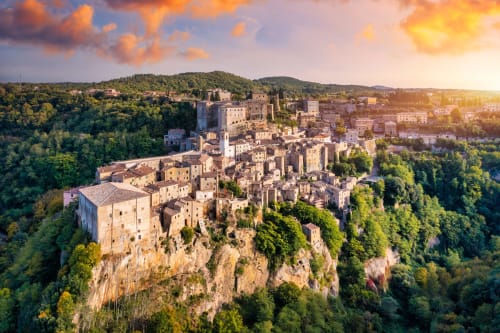
Sorano is a small village in the Maremma hinterland built entirely of tuff.
You can visit the walls , the countless palaces , castles and fortifications , abbeys , churches and chapels as well as the Jewish ghetto with its synagogue .
A special stop deserves the Città del Tufo Archaeological Park , an archaeological area that extends over a vast area between Sorano and Sovana. It includes various Etruscan necropolises scattered throughout the territory and connected to each other by a suggestive coeval road network that develops in trenches between steep tuff rock walls: these roads are called Vie Cave or Cavoni.
Vetulonia
Vetulonia, formerly called Vetulonium, was an ancient city in Etruria, Italy, the site of which is probably occupied by the modern village of Vetulonia.
Visit the archaeological museum and the walls and then enter the archaeological area .
Magliano in Toscana
Discover the numerous settlements of the Etruscan era, the towns of Pereta and Montiano , of medieval origins. The historic center of Magliano is surrounded by a wall built between the late Middle Ages and the Renaissance.
Visit the walls, the churches, the center full of restaurants and home to various events related to the excellence of the area.
Look for the centuries-old Witch's Olive Tree at the beginning of the village and discover the secrets of this wonderful area!
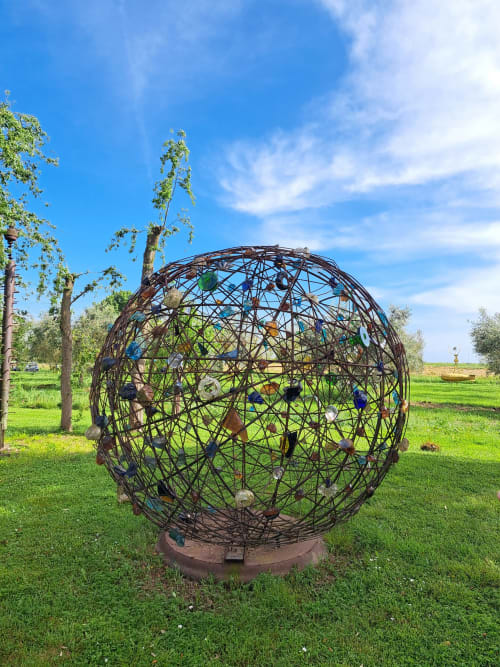
VIAGGIO DI RITORNO - GARDEN
The Giardino Viaggio di Ritorno is a contemporary art park nestled in the countryside of Castiglione della Pescaia. It is not a traditional garden: it is an experiential journey, a symbolic voyage that invites visitors to rediscover their original nature, free from the trappings of modern life.
As Tomaso Montanari writes, it is a place capable of instilling the serenity of a paradisiacal oasis.
The garden consists of monumental installations created from recycled materials: scraps, forgotten objects, and fragments of everyday life that become universal art.Each work is part of a story. The result is a visionary landscape where nature and art intertwine in a single narrative.
The garden was conceived and created by Rodolfo Lacquaniti, a bioarchitect and artist who works with the languages of total contemporary art: installations, video art, performance, painting, music, photography, words, and gesture.His work stems from a reflection on consumer society and the “energetic impoverishment” of contemporary humanity.Through the creative reuse of materials, Lacquaniti constructs a world that invites us to return to our essence.
As Tomaso Montanari writes, it is a place capable of instilling the serenity of a paradisiacal oasis.
The garden consists of monumental installations created from recycled materials: scraps, forgotten objects, and fragments of everyday life that become universal art.Each work is part of a story. The result is a visionary landscape where nature and art intertwine in a single narrative.
The garden was conceived and created by Rodolfo Lacquaniti, a bioarchitect and artist who works with the languages of total contemporary art: installations, video art, performance, painting, music, photography, words, and gesture.His work stems from a reflection on consumer society and the “energetic impoverishment” of contemporary humanity.Through the creative reuse of materials, Lacquaniti constructs a world that invites us to return to our essence.
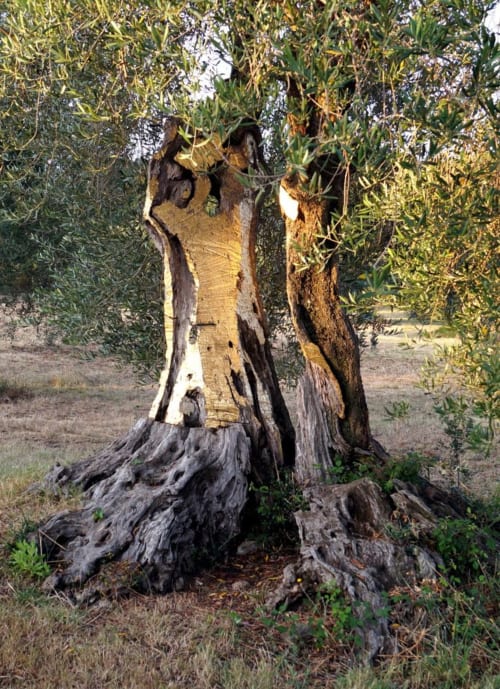
DANIEL SPOERRI - GARDEN
The Daniel Spoerri Garden is a contemporary sculpture park located in Seggiano, on Mount Amiata, in Tuscany. Founded in 1997 by Swiss artist Daniel Spoerri, the garden was conceived as a natural extension of his artistic exploration: a place where art intertwines with the land, time, and memory.It is part of the Hic Terminus Haeret Foundation, which preserves its spirit and vision.
The garden spans approximately 16 hectares of Tuscan countryside, dotted with over one hundred works by Spoerri and international artists.The sculptures emerge among olive trees, meadows, and paths, creating a continuous dialogue between the artwork and the landscape.Each installation is designed to be an integral part of the site: some blend into nature, while others challenge it with ironic, surreal, or metaphysical forms.It is an open-air museum where visitors become part of the artwork.
Daniel Spoerri, born in 1930, is a key figure in the Nouveau Réalisme movement.Famous for his *tableaux-pièges* (trap paintings), he transformed everyday objects into art, freezing the moment and memory in time.With this garden, Spoerri sought to create a meeting place between art and nature, where time does not erase but transforms.
The garden spans approximately 16 hectares of Tuscan countryside, dotted with over one hundred works by Spoerri and international artists.The sculptures emerge among olive trees, meadows, and paths, creating a continuous dialogue between the artwork and the landscape.Each installation is designed to be an integral part of the site: some blend into nature, while others challenge it with ironic, surreal, or metaphysical forms.It is an open-air museum where visitors become part of the artwork.
Daniel Spoerri, born in 1930, is a key figure in the Nouveau Réalisme movement.Famous for his *tableaux-pièges* (trap paintings), he transformed everyday objects into art, freezing the moment and memory in time.With this garden, Spoerri sought to create a meeting place between art and nature, where time does not erase but transforms.
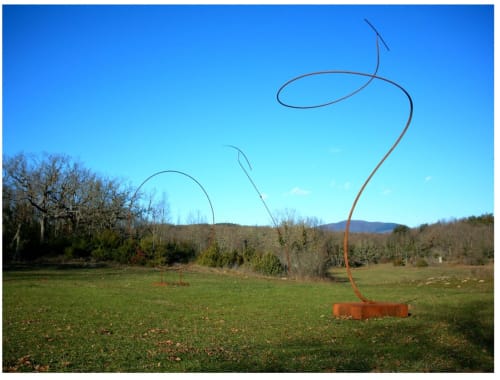
Paul Fuchs - Sounds garden
The Garden of Sounds is a unique place in the Tuscan art scene: a park of sound sculptures created by German artist Paul Fuchs, who has been living and working in the Montieri woods for over twenty years.Here, art isn’t just meant to be looked at—it’s meant to be heard. The sculptures, which stand over 30 meters tall, interact with the wind, light, and landscape, transforming nature into a gigantic orchestra.
The garden is a monumental work born of an immense undertaking:
25 metric tons of iron transported into the woods and hoisted “up to the sky” using makeshift equipment.
Imposing sculptures such as Il Grande Indicatore, Spirale Eolica, High B, Segno nel Vento, and Tra la Lente join the historic works Crescendo and Visitatore Extraterrestre.
Installations that move, vibrate, sing, and moan: true contemporary creatures, capable of evoking different emotions depending on the light, the wind, and the time of day.
Paul Fuchs is a sculptor, painter, musician, and sound artist.His artistic practice stems from a deep connection with nature and a desire to transform metal into something alive—capable of moving like blades of grass and sounding like ancestral instruments.Alongside him, his wife Gaby Beisiegel-Fuchs, his son Zoro Babel, and a community of friends and neighbors physically contributed to the creation of the garden, making it a collective work imbued with real life.
The garden is a monumental work born of an immense undertaking:
25 metric tons of iron transported into the woods and hoisted “up to the sky” using makeshift equipment.
Imposing sculptures such as Il Grande Indicatore, Spirale Eolica, High B, Segno nel Vento, and Tra la Lente join the historic works Crescendo and Visitatore Extraterrestre.
Installations that move, vibrate, sing, and moan: true contemporary creatures, capable of evoking different emotions depending on the light, the wind, and the time of day.
Paul Fuchs is a sculptor, painter, musician, and sound artist.His artistic practice stems from a deep connection with nature and a desire to transform metal into something alive—capable of moving like blades of grass and sounding like ancestral instruments.Alongside him, his wife Gaby Beisiegel-Fuchs, his son Zoro Babel, and a community of friends and neighbors physically contributed to the creation of the garden, making it a collective work imbued with real life.
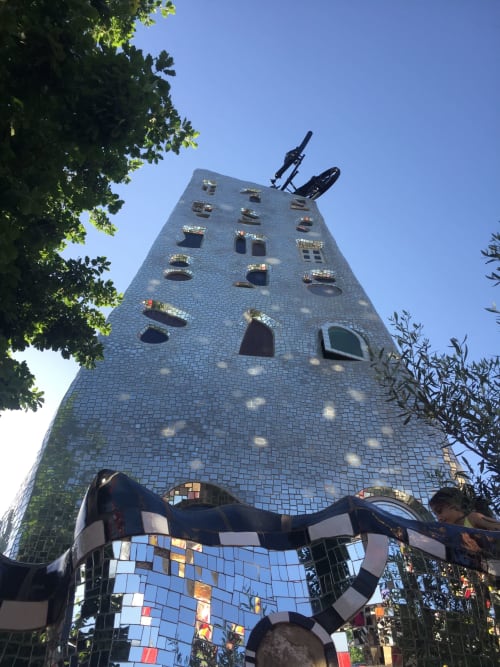
The Tarot Garden
The Tarot Garden is a monumental art park located in Garavicchio, near Pescia Fiorentina, in the municipality of Capalbio.It is a visionary place, an imaginative world populated by gigantic sculptures inspired by the Major Arcana of the Tarot, transformed into living, colorful, symbolic figures.This garden is more than just a place to visit: you walk through it as if through a story, an initiatory journey through archetypes, myths, and fantasy.
The garden consists of imposing sculptures made of steel and concrete, covered with mosaics of glass, ceramics, and mirrors.The works—some over ten meters tall—create a surreal landscape, a magical village where every figure is a symbol. The garden was built through immense, artisanal, physical, and often experimental labor. Each sculpture is a universe unto itself, but together they form a single, grand narrative.
The garden was conceived by the Franco-American artist Niki de Saint Phalle, a central figure in contemporary art and Nouveau Réalisme.After visiting Gaudí’s Park Güell, Niki dreamed of creating a place that was just as free, fantastical, and spiritual.The Tarot Garden is the result of that dream: a total work of art, built with the help of artisans, friends, collaborators, and her husband Jean Tinguely.
The garden consists of imposing sculptures made of steel and concrete, covered with mosaics of glass, ceramics, and mirrors.The works—some over ten meters tall—create a surreal landscape, a magical village where every figure is a symbol. The garden was built through immense, artisanal, physical, and often experimental labor. Each sculpture is a universe unto itself, but together they form a single, grand narrative.
The garden was conceived by the Franco-American artist Niki de Saint Phalle, a central figure in contemporary art and Nouveau Réalisme.After visiting Gaudí’s Park Güell, Niki dreamed of creating a place that was just as free, fantastical, and spiritual.The Tarot Garden is the result of that dream: a total work of art, built with the help of artisans, friends, collaborators, and her husband Jean Tinguely.